In this guide, you’ll discover:
- What merino wool is and why it is so fine
- The 4 properties knitters value most
- When to choose merino and when to choose alpaca
- Our merino yarn qualities
- What to knit with merino and how to care for it so it lasts for years
What is merino wool?
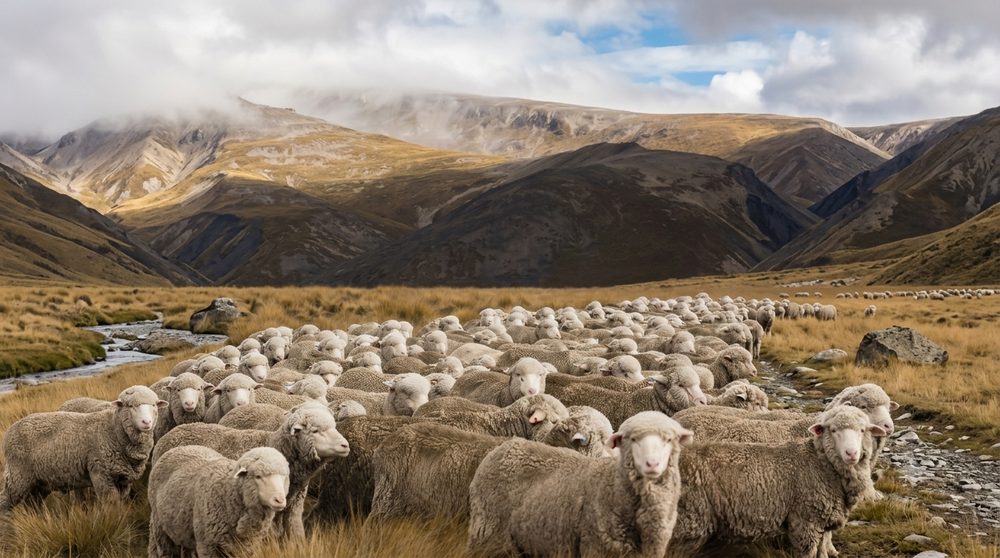
Merino wool comes from the merino sheep, a breed internationally recognized for producing one of the finest and softest wool fibers in the world.
Although its origin is associated with Spain, today the main producers of merino wool are countries such as Australia, New Zealand, Argentina, and Uruguay, where natural conditions favor the development of excellent-quality fibers.
But the question that really matters isn’t where it comes from. It’s this: why did the wool you remember from childhood feel itchy, while this one doesn’t?
It All Comes Down to One Number: Microns
The fineness of a fiber is measured in microns. The lower the number, the finer the fiber.
Regular wool can measure over 30 microns. At that thickness, the fiber is stiff: when it touches the skin, it doesn’t bend, it pricks. That’s exactly what you felt as a child with that sweater you were forced to wear. It wasn’t an allergy; it was physics.
Merino wool is well below that threshold. Our YANA XL, for example, measures 21.5 microns. At this fineness, the fiber no longer pricks the skin: it bends, yields, and adapts to it.
That number explains everything that follows: the softness, the comfort, the elasticity, and the fact that you can knit something with this wool for a newborn. It all comes down to that.
Discover Amano Yarns’ natural fiber collection
Why Is Merino Wool So Highly Valued?
There are four reasons that always come up in conversations with our customers. Here they are.
It Regulates Temperature
Merino fibers create tiny air pockets. When it’s cold, the trapped air helps retain body heat. When temperatures rise, it releases excess heat instead of allowing it to build up.
Going back to five o’clock in Arequipa: this means a merino cardigan won’t feel suffocating when the sun is out, yet it will still keep you warm when the temperature drops. One garment for both temperatures in the same day.
And if you’re knitting a gift for someone in Lima, the jungle, or abroad, this property is twice as valuable: you don’t have to guess what the weather will be like in another city. Merino adapts on its own.
Discover Amano Yarns’ natural fiber collection
It’s Breathable and Manages Moisture
Merino absorbs moisture and naturally releases it. It doesn’t cling to the skin or create that damp feeling that other fibers can cause after several hours of wear.
There’s a reason travel and outdoor clothing is often made with merino. If you’re knitting something that someone will wear for ten hours straight, a sweater for the office or a vest for walking, this is the property that can make the difference between a garment you enjoy wearing and one you want to take off by mid-afternoon.
Helps Reduce Odors
Merino wool makes it difficult for odor-causing bacteria to multiply. The garment stays fresh for longer and requires fewer washes.
This may sound like a minor detail, but it isn’t. Every wash wears down a natural fiber. A garment that is washed every fifteen wears instead of every three can last years longer. The less a fiber is washed, the longer it lasts.
It’s Truly Soft
Here’s what you feel before you understand why. When someone touches merino for the first time in our store, they almost always do the same thing: they press it against their cheek or forearm. It’s an automatic gesture.
And that softness isn’t just an aesthetic luxury. It’s what makes merino ideal for knitting baby garments, clothing for sensitive skin, and anything worn directly against the body without a layer underneath. A merino neckline can be worn without a shirt underneath. Many fibers simply don’t pass that test.
Discover Amano Yarns’ natural fiber collection
Merino or Alpaca? The Question We Get All the Time
This is the question we receive most often on WhatsApp, and the short answer is: it depends on what you want your garment to do.
The longer answer is easier to understand with an example. Imagine knitting the same hat twice, one in each fiber.
The merino one returns to its original shape every time you take it off. It stretches when you put it on and then springs back into shape. After an entire winter, it still fits the same way.
The alpaca one is warmer, but over the months, it relaxes. It gives a little, becomes slightly larger, and starts to drape.
Neither one is poorly knitted. They’re simply fibers with different personalities: merino has memory; alpaca has drape.
| Merino | Alpaca | |
| Elasticity | High, recovers its shape | Lower, tends to stretch out |
| Drape | Structured, holds its shape | Fluid, drapes elegantly |
| Warmth | Moderate, adapts to temperature | Very warm, provides more insulation |
| Stitch definition | Crisp, every detail shows | Soft, with a delicate halo |
| Best for | Hats, cuffs, cowls, fitted garments, baby clothing | Shawls, oversized garments, harsh cold |
The practical rule: if the garment needs to hold its shape, choose merino. If it needs to drape beautifully, choose alpaca.
And there’s a third answer that many knitters discover too late: you don’t have to choose. Baby alpaca and merino blends combine the warmth and softness of one with the elastic memory of the other. For everyday garments, it’s probably one of the most balanced combinations you can find.
Among them are:
Discover Amano Yarns’ natural fiber collection
Our Merino Yarns
Each one was created for something different.
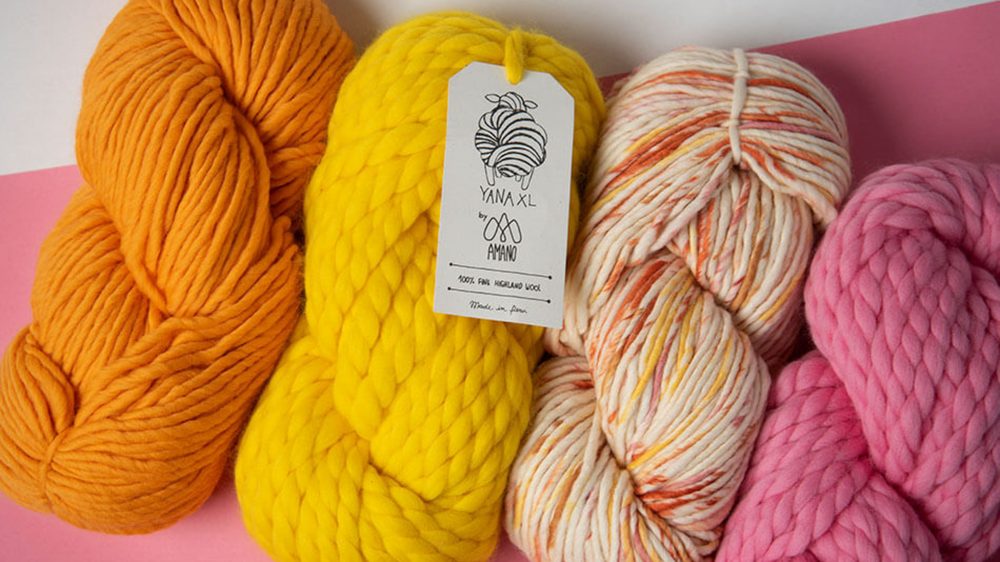
YANA is the most versatile of the family. With a balanced weight, bold and vibrant colors, and predictable yardage that you’ll appreciate when knitting your first sweater: four skeins.
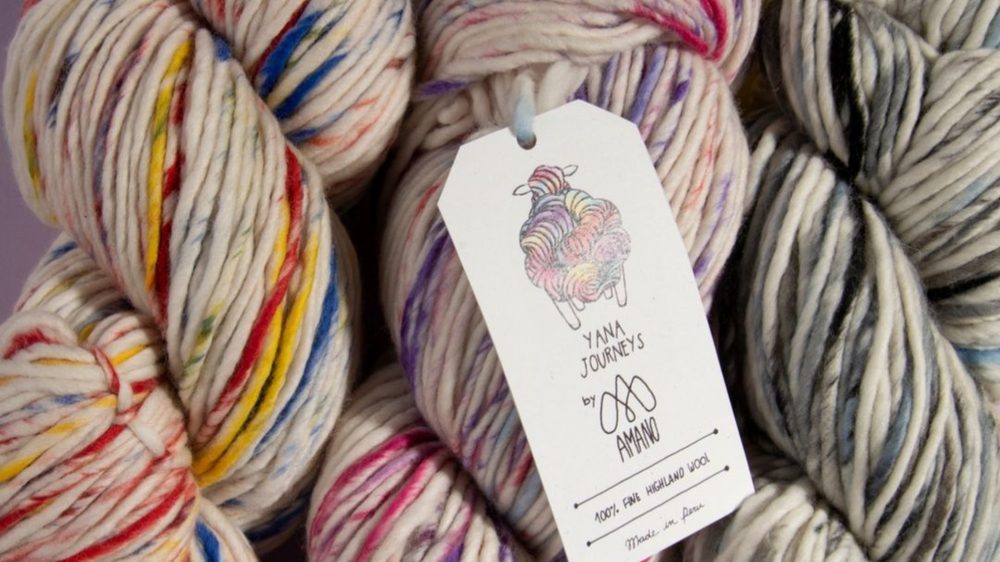
YANA Journeys features hand-painted skeins inspired by Andean destinations. Each one is different from the next, so if two knitters use the same pattern, they’ll end up with two different garments. That’s its charm—and its magic.
WARMI blends baby alpaca with merino. Andean softness combined with the elasticity that gives a garment structure. Perfect for pieces that need both body and comfort.
MAMACHA is made of 70% baby alpaca and 30% merino. Its Quechua name means “beloved and respected,” and it certainly lives up to it: it has a dual personality, combining the softness of alpaca with the memory of merino.
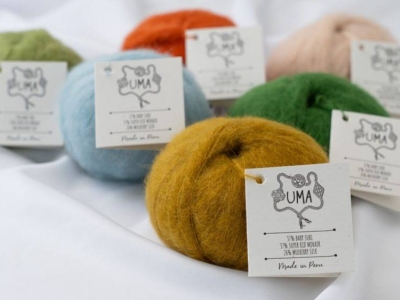
QUMA is our newest addition. Made from 100% fine merino, it is spun with air to achieve a cloud-like lightness. It’s the one you’ll want to keep touching—and the one you’ll be least likely to take off.
Discover all available yarn qualities here
How to Care for Your Merino Wool Garment
None of these rules are arbitrary. Each one has a physical reason behind it, and understanding why makes them easier to remember.
Wash in cold water. Heat causes the fiber scales to open and interlock. This is what leads to felting—the number one enemy of a wool garment.
Use a gentle wool detergent. Regular detergents contain enzymes designed to break down proteins. Wool is a protein fiber.
No bleach or whitening agents.
Dry flat, never hang. A wet garment can weigh several times more than when it’s dry. When hung, that extra weight stretches it from the shoulders, and it may not return to its original shape.
Keep it out of direct sunlight. Colors can fade and the fiber can become dry.
Store it folded. Hangers can gradually deform the shoulders over time.
Avoid ironing. If you need to remove a crease, use steam from a distance and never press the iron directly onto the garment.
A well-cared-for merino garment can last for years and years. Washed incorrectly, it can be ruined in an afternoon. Literally, the difference can come down to cold water versus hot water.
Frequently Asked Questions
Does merino wool itch?
No. And now you know why: itchiness comes from coarse fibers that prick the skin instead of bending. Merino is so fine that it yields on contact. That’s why it works even for sensitive skin and baby clothing.
How is it different from regular wool?
Mainly in its fineness. Regular wool comes from breeds with much coarser fibers. That difference in micron count is what translates into softness, elasticity, and comfort.
Does merino wool shrink?
Only if you wash it incorrectly. Heat combined with friction causes the fiber scales to interlock, making the garment felt and shrink. Cold water, no rubbing, and flat drying will help your garment maintain its size for years.
Is merino wool suitable for warm climates?
Yes, and this is one of its greatest advantages. Because it is breathable and regulates temperature, it doesn’t create the stuffy feeling that other wools can. For warmer weather, choose lighter weights and more open stitches, but merino works perfectly well.
How many skeins do I need for a sweater?
With YANA, around four skeins for a standard size. However, we always recommend knitting a gauge swatch first: every knitter has their own tension, so the amount needed can vary.
At Amano, Everything Starts with the Fiber
We’ve been working with natural fibers in Arequipa for years, and one thing becomes clear every season: a project begins long before you cast on the first stitch. It begins when you choose what to knit with.
You can have the perfect pattern and impeccable technique, but if the fiber isn’t right for what you want to achieve, the result will never be what you imagined. And the opposite is also true: the right fiber can make even a simple stitch look extraordinary.
That’s why we develop each yarn with a real project, real hands, and the person who will wear it in mind. Our merino qualities are made for those looking for garments that last, hold their shape, and provide warmth without feeling overwhelming.
Now it’s your turn to choose yours.