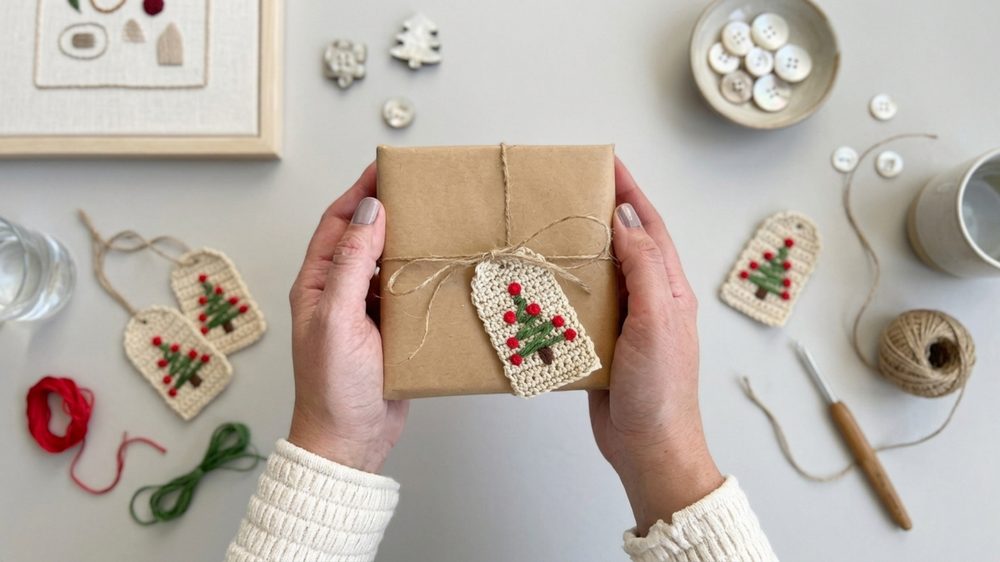
Here in Peru, Christmas opens at midnight on the 24th. With 30 degrees outside.
Both things matter more than they seem. The first, because your deadline is not the morning of the 25th: it is 11 PM on the 24th, while someone is warming up the panettone and the house is already filling with people. The second, because the gift you knit will not be worn that day. It will be put away until June, when it actually gets cold.
That changes how it makes sense to think about a knitted gift in Peru. You are not knitting something the person needs tomorrow: you are knitting something they will wear for the first time in six months and use for years. There is less pressure than you think, and more room to do it well.
What there is not, is infinite time. So this guide works in reverse from the usual: calendar first, projects after.
In this guide you will find:
- How much time you have left and what you can realistically finish
- 2 projects for beginners
- 2 intermediate-level projects
- 2 projects for experienced knitters
- How much yarn you need for each one
- The questions we get most in December
First things first: how much time do you have left?
The same story repeats itself every year: you spot a beautiful pattern in December, start with enthusiasm, and at 11 PM on the 24th the project is still unfinished on the table.
That is why the most important tip in this guide comes before the projects: choose a project you can actually finish with the real time you have, not the ideal time you imagine you will have in December.
So start here and choose after:
| If you start… | You can comfortably finish… |
| In December | Scarf or wrap · Hat · Cowl |
| Before December 1st | All of the above + vest |
| Before November 15th | All of the above + sweater or cardigan |
| Before November 1st | All of the above + stole or lace shawl |
And one rule that holds at any level: a simple finished gift always beats an ambitious one left half done. Nobody unwraps a single loose sleeve on Christmas Eve and gets excited.
For those just starting out
If you have not been knitting long, there is good news on two fronts: first, there are beautiful projects within your reach. Second, with the right yarns, the result will look like it came from an expert knitter.
The key at this level is to choose straight projects with no complicated decreases or frequent stitch changes. Progress should be visible, motivation should stay high, and the gift should be ready by the 24th.
Gift 1: Scarf or wrap in garter stitch
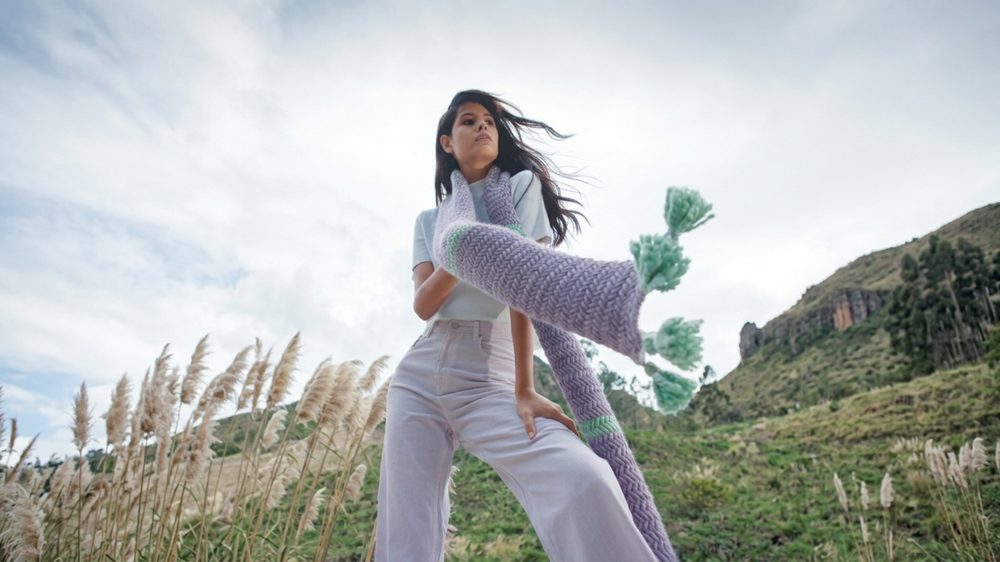
Who is it perfect for? For anyone, at any age. It is the gift that never fails and the only one on this list with no size, no measurements, and no way to get wrong.
Why it works for beginners: it is the most forgiving project in existence. Knit stitches, worked straight, with no purl rows if you work in garter stitch. The only challenge is keeping your tension even, and that comes naturally with practice.
The ideal yarn: YANA 100% Fine Highland Sheep Wool. Its chunky weight means the scarf grows quickly, stitches look large and defined, and the wide color range lets you personalize the gift for each person. For something with unique, unrepeatable colors, YANA JOURNEYS hand-painted skeins turn a simple scarf into something truly special.
Recommended pattern: Aurora Scarf, knitted in MAMACHA
Estimated time: one dedicated weekend. Two relaxed weekends at most.
Gift 2: Basic hat
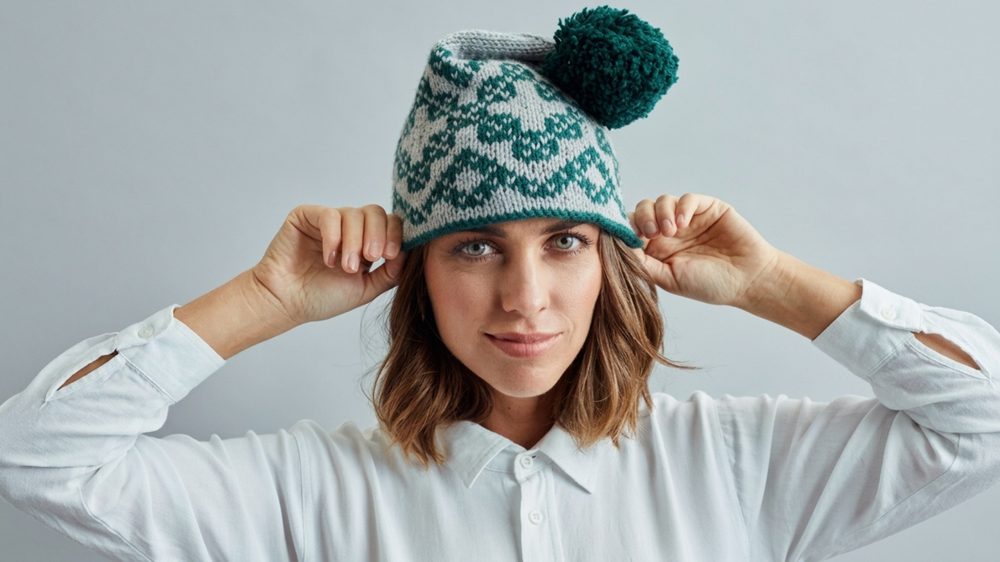
Who is it perfect for? For anyone who lives somewhere cold or simply loves hats. A functional gift that actually gets worn.
Why it works for beginners: a basic circular hat has a very manageable learning curve. Once you master the ribbed cast-on row and stockinette stitch, the rest flows on its own.
The ideal yarn: here the fiber choice changes the timeline entirely, so choose based on how much time you have left.
MAMACHA (70% Baby Alpaca, 30% Merino · 12 mm needles) is the fast option. With 50 m per skein and large needles, the hat grows row by row and the softness is felt from the very first wear.
WARMI (same blend, but 4–5 mm needles · 150 m per skein) is the fine option. It produces a warmer, denser hat with a more professional finish. But it takes considerably longer, so only if you have the margin.
Recommended pattern: Eva Hat, knitted in Warmi
Estimated time: in MAMACHA, one focused afternoon. In WARMI, three or four evenings.
For those who already have a few projects under their belt
For those who already have a few finished projects, intermediate-level Christmas gifts are the chance to make a visible leap in quality and complexity. The result is still accessible but the impact is considerably greater: these are the ones where the person receiving the gift looks at it differently and asks “did you make this yourself?”
Gift 3: Cowl or neckwarmer
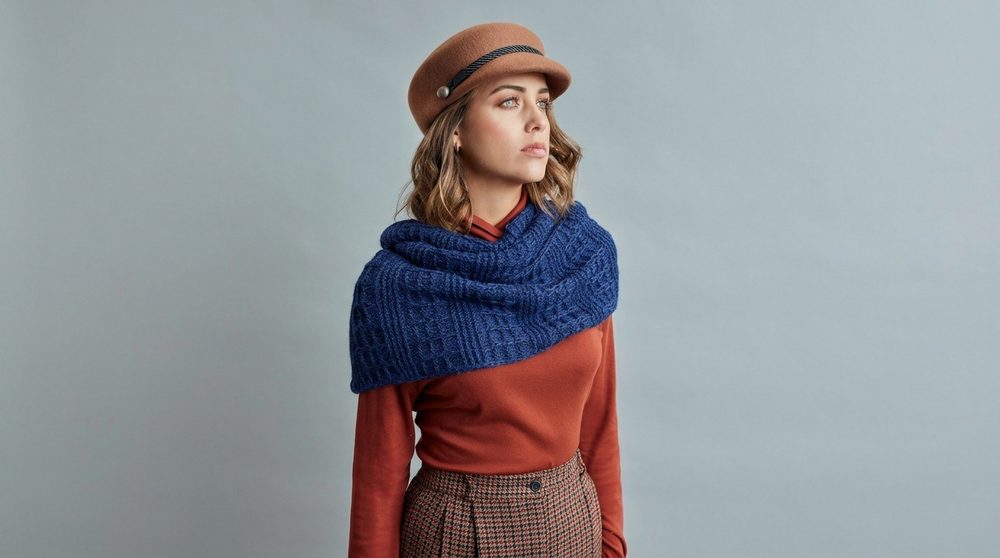
Who is it perfect for? For the person who is always cold, for someone with a sense of style, for anyone who appreciates handmade things. A knitted cowl is one of those gifts that gets worn season after season.
Why it works for intermediate knitters: it involves knitting in the round, managing ribbing, and keeping tension more consistently than in straight projects. Nothing that can’t be learned calmly, and the result is worth every row.
The ideal yarn: MAMACHA is perfect for cowls that truly wrap around you. Its alpaca and merino blend delivers a warmth that is felt from the first wear. WARMI JOURNEYS, with its hand-painted colors, turns a cowl into a one-of-a-kind piece that nobody else will have.
Recommended patterns: Tamara Cowl, knitted in Puna Trazable / Anahi Cowl, knitted in Baby Alpaca
Estimated time: three to five days at a relaxed pace in MAMACHA. About a week and a half in WARMI.
Gift 4: Vest
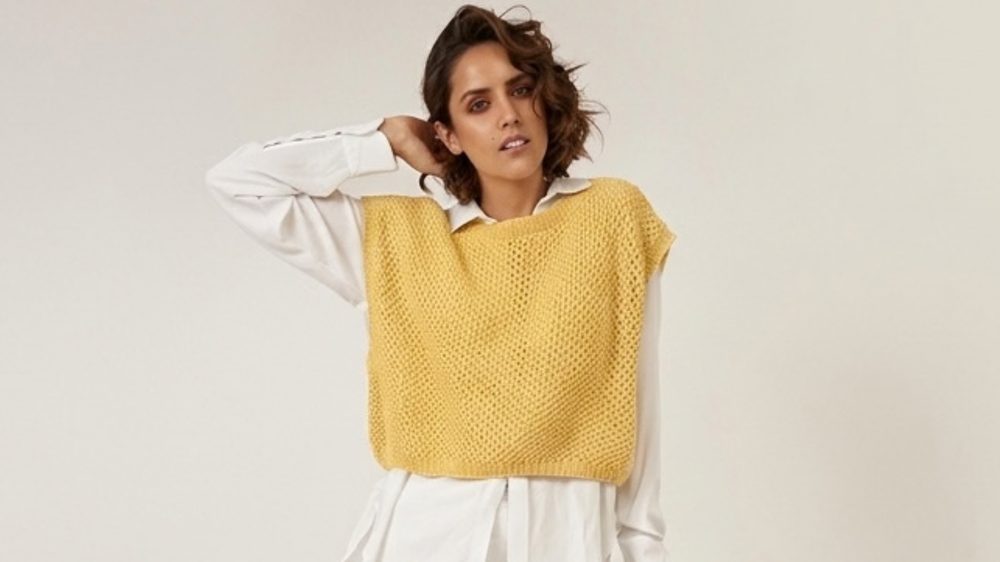
Who is it perfect for? For that stylish person who appreciates handmade garments and who you know will wear it with pride. A vest has something a sweater doesn’t: it works in transitional weather, so in Peru it gets worn far more months of the year.
Why it works for intermediate knitters: a vest involves managing increases, decreases, and some construction, but it remains one of the most rewarding projects at this level. No sleeves to calculate, no complex seams.
The ideal yarn: WARMI produces vests with body, good drape, and a very professional-looking finish. Its worsted weight means the project moves along well without sacrificing stitch definition.
Recommended patterns: Alessia Vest, knitted in Awa / Marina Vest, knitted in Mayu
Estimated time: two to three weeks of regular knitting. Starting in November is the key.
Discover WARMI and its melange tones →
For those who knit with their eyes closed
If knitting is already your own language, I am not going to explain what a decrease is. This section is about the three things that do complicate a large gift project: the size, the dye lot, and the calendar.
Gift 5: Sweater or cardigan
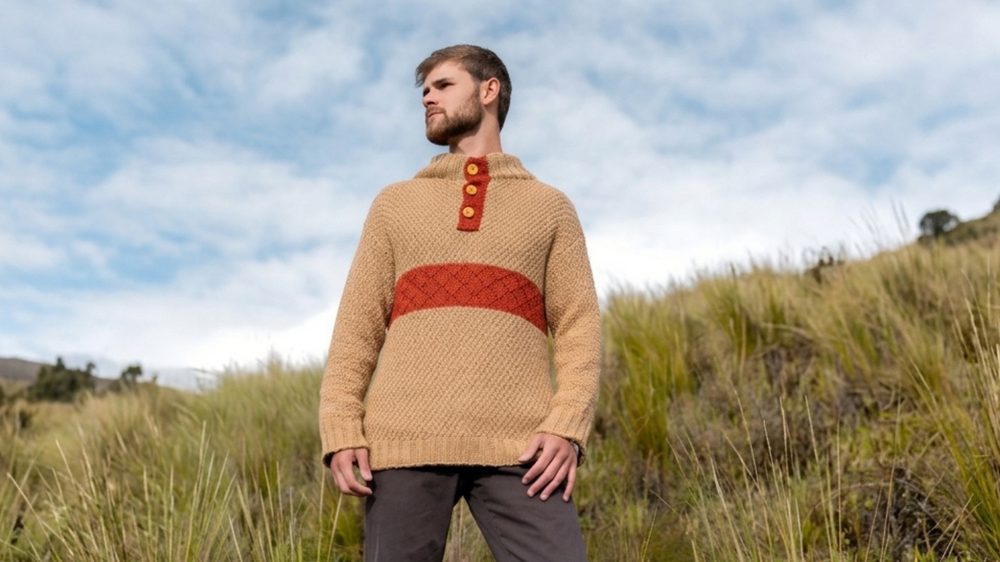
Who is it perfect for? For the most special person on your list. A hand-knitted sweater is the ultimate gift: the one that takes the most time, the one that is most treasured, and the one that gets worn the most.
The three real problems with knitting a sweater as a gift:
The size, without asking. You don’t have to guess. Borrow a sweater they love and measure it: chest width, total length, sleeve length. Knit to those measurements, not to a size chart. And if you can’t even do that, choose a pattern with a relaxed or oversized fit: it forgives two sizes without anyone noticing.
The dye lot. Buy all the yarn at once and from the same lot. For a personal project you can go back to the store; for a gift with a deadline, discovering in the sleeve that the color doesn’t quite match is exactly the kind of problem that has no fix in December.
Blocking counts as calendar days. An alpaca or merino sweater needs to be washed and dried flat, and that can take two full days. If you finish knitting on the 23rd, you won’t make it. Put blocking in the schedule as its own stage.
The ideal yarn: MAMACHA for sweaters with luxurious drape and softness. YANA for sweaters with more body and texture, and the better of the two if the pattern has cables or stitches you want to show off: YANA’s stitch definition is something no softer fiber can match.
Recommended patterns:
- Cristina Sweater, knitted in YANA
- Roberta Sweater, knitted in Baby Alpaca Merino
- Elsa Cardigan, knitted in Sami
- Yawar Sweater, knitted in Baby Alpaca Merino
Estimated time: three to six weeks of consistent knitting. If the gift is a sweater, start in November or earlier.
Gift 6: Luxury stole or shawl
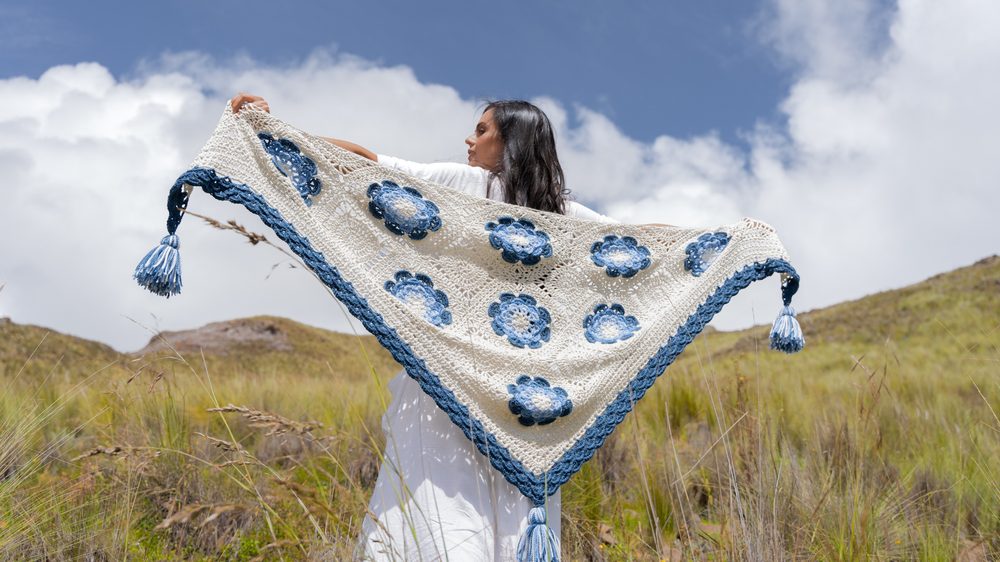
Who is it perfect for? For someone who appreciates the fine, the delicate, and the timeless. A knitted stole in a luxury fiber is a gift that lasts decades.
Why it is the most demanding project on the list: shawls and stoles are usually worked in fine or lace-weight yarns, which involve lace stitches, much more stitch counting, and a tension that must be kept consistent throughout the entire project. A mistake on row 40 shows up on row 200.
Two things that save tears:
Use a lifeline. A contrast thread threaded through all the stitches every 20 or 30 rows. If something drops, you frog back to there and not to the beginning. In lace it is not optional, it is a lifeline in the most literal sense.
The stole does not exist until you block it. Fresh off the needles it looks tight, shrunken, and disappointing, and that is normal. Blocking is what opens up the lace and reveals the pattern, and it can add up to 30% to the size of the piece. Allow for the space and the two days of drying time before the 24th.
The ideal yarn: MAYU for stoles with extraordinary drape and lightness.
Recommended patterns: Emma Stole, knitted in Mayu Lace / Gladys Shawl, knitted in Royal Alpaca Cashmere Silk
Estimated time: varies greatly depending on the pattern. Allow at least three weeks plus blocking for something full-size.
How much yarn do I need?
This is the question that most often stalls a purchase, so here is how to work it out without a pattern in hand.
Step 1. The approximate yardage your project needs:
| Project | Approx. yardage |
| Adult hat | 100 – 150 m |
| Cowl | 150 – 250 m |
| Scarf or wrap | 200 – 400 m depending on length |
| Vest | 600 – 900 m |
| Adult sweater | 900 – 1,400 m |
| Stole or shawl | 600 – 1,000 m |
Step 2. The yardage each skein provides:
| Yarn | Meters per skein |
| YANA · YANA Journeys | 160 m (200 g) |
| YANA XL | 50 m (200 g) |
| WARMI · WARMI Journeys | 150 m (100 g) |
| MAMACHA | 50 m (100 g) |
| QUMA | 120 m (100 g) |
Step 3. Divide, and add one skein. The yardage your project needs divided by the yardage per skein. And always one extra: when you have a gifting deadline, running out three rows from the end is not an option.
And the step almost nobody takes but that actually makes the difference: knit your gauge swatch before buying everything. Every knitter’s hands work differently and the calculation changes. Ten minutes of swatching can save you two extra skeins, or catch you one short.
Questions we get most in December
When should you start knitting to have the gift ready for Christmas?
Check the table at the beginning. As a general reference: accessories like hats and cowls, two weeks is enough. Vests, three weeks minimum. Sweaters and elaborate shawls, start in November or even earlier. The golden rule is always to start sooner than you think you need to.
What if I don’t finish the project on time?
It happens. And that is okay. A knitted gift delivered in January with a note that says “it took longer than expected because I wanted it to be perfect” is even more special than a rushed one. Knitting cannot be hurried.
How do I know what size to knit for a gift sweater?
A gauge swatch is the first answer. The second is to ask, discreetly, or directly if the person will appreciate the honesty of the gesture. You can also opt for projects like cowls, hats, or stoles, which are one-size-fits-all and eliminate that dilemma entirely.
Is it better to gift the yarn or the finished project?
Both are valid options and depend on the recipient. A knitter might love receiving a skein of YANA JOURNEYS or MAMACHA with a pattern attached. For someone who doesn’t knit, gifting the finished garment has far more impact.
Which Amano yarn is the most versatile for Christmas gifts?
YANA and MAMACHA are the two answers that always come up. YANA for its weight that lets you make fast progress and its vibrant color palette. MAMACHA for its softness that makes any garment feel like a luxury from the very first wear.
Can you knit with wool in the December heat?
It is the most Peruvian question of all and the answer is yes, but with tricks. Knit at night or early in the morning. Choose small projects that don’t sit over your legs: a hat or a cowl before a blanket. And if the heat wins, switch to cotton or linen qualities, which feel completely different in warm hands.
Ready to start your Christmas gifts?
Every project begins with a decision: what you are going to knit it with.
At Amano Yarns you will find the natural fibers and patterns you need to make every gift this Christmas something the recipient will treasure for years.
And that is the real difference: a purchased gift lasts a season, one knitted with good fiber gets passed down.
The quality will show in every stitch. Especially every time that person wears it and remembers who made it.