Some stitches never die; they just wait for their moment to come back stronger than ever. And that moment is now.
In the latest autumn runways, textured knitwear took center stage. Chanel presented a cable-knit sweater dress in red and pink. Max Mara leaned into tonal knitwear, playing with different knit textures within the same color family. And Fair Isle, that geometric pattern from the Shetland Islands that usually only appears when temperatures drop, was everywhere this season.
What is interesting is not that they are trending. It is why: in an era where everything is mass-produced, cable knitting looks unmistakably handmade. It cannot be faked. And that, today, is worth more than ever.
In this blog we cover everything about these three stitch patterns: cables, ochos, and Fair Isle. What they are, how to knit them, and most importantly, which yarns work best with each one.
In this guide you will find:
- What the three stitches have in common
- Cables: what they are, how to knit them, and which fiber to use
- Ochos: the variation that elevates everything
- Fair Isle: color, pattern, and Scottish magic
- Which one to start with based on your skill level
What do cables, ochos, and Fair Isle have in common?
All three are stitches that make a statement, they are not background texture, they are the star of the garment.
And that is exactly why all three depend on the same thing: a fiber with body, so the stitch definition has depth and the result truly impresses.
You can have impeccable technique and a perfect pattern, but if the fiber lacks structure, the relief flattens and all that work is lost. In these three stitches, yarn choice changes everything. They need a yarn with elastic memory, body, and structure, one that holds the shape of each cross, defines the relief, and stands the test of time without losing what makes it special.
But let’s take them one at a time.
Cables: the stitch that conquered the runways
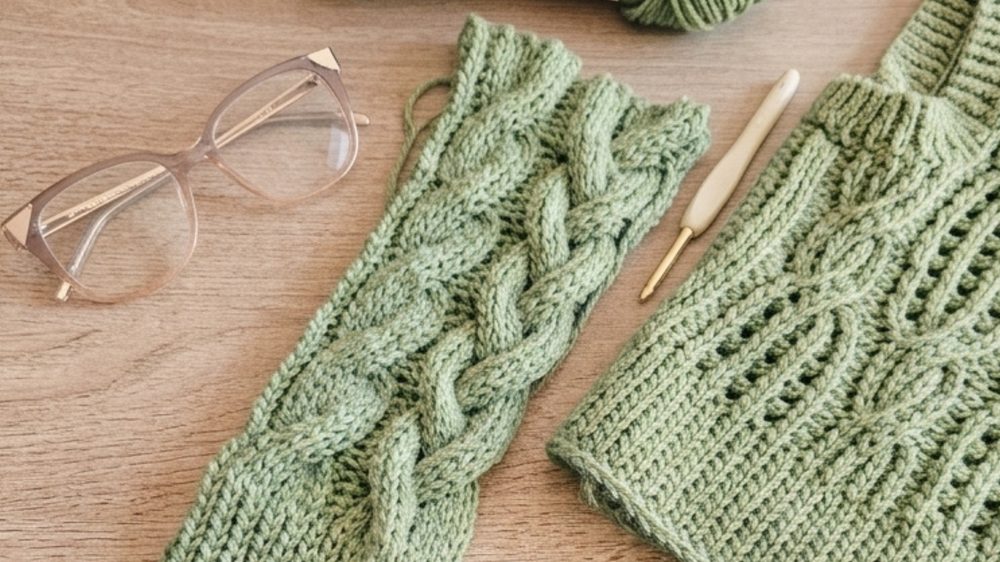
What exactly are cables in knitting?
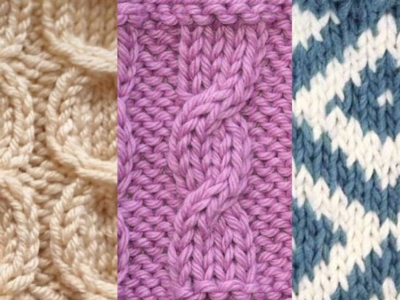
A cable in knitting is exactly what you imagine, stitches that cross over each other to create an interlaced texture with volume and relief. The visual effect resembles a real rope or braid.
What many knitters don’t know is that the secret to a well-executed cable lies not only in the technique but also in the yarn. A fiber with good elastic memory makes the crossed stitches define themselves and causes the cable to visually “pop” from the fabric.
How do you knit a basic cable?
The process comes down to three steps:
- Work with a cable needle or auxiliary needle.
- Take some stitches and hold them in front or behind, depending on the direction of the cable.
- Knit the next stitches, then knit the held ones.
That cross is what creates the effect. And here is the trick that makes it all click: if you hold the stitches in front, the cable leans to the left. If you hold them behind, it leans to the right. That’s all there is to it. Every cable variation in existence comes from combining those two decisions.
And once you understand the logic, your mind starts seeing possibilities everywhere.
What yarn should you use for cables?
Cables need a fiber with body and elasticity, because each cross has to hold its shape.
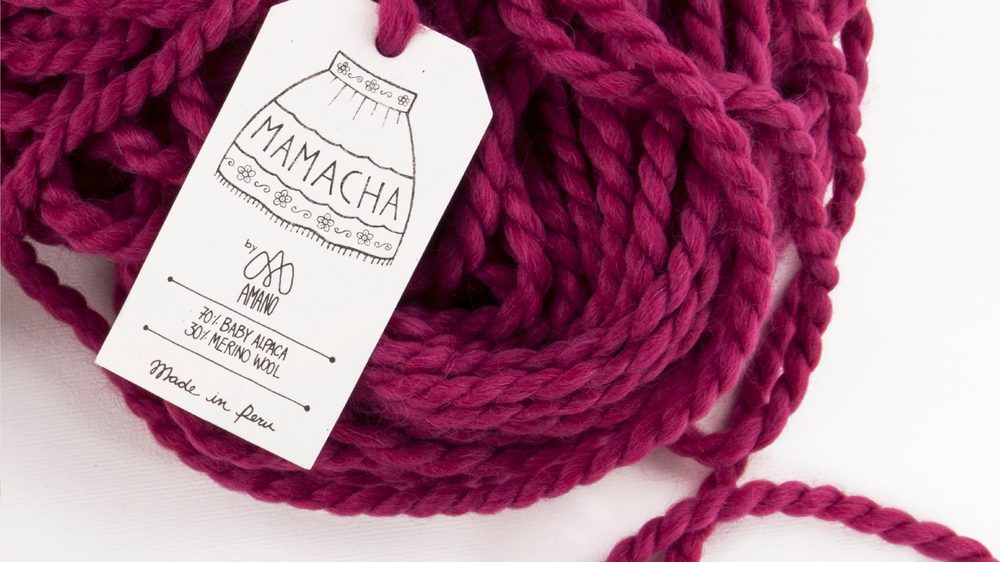
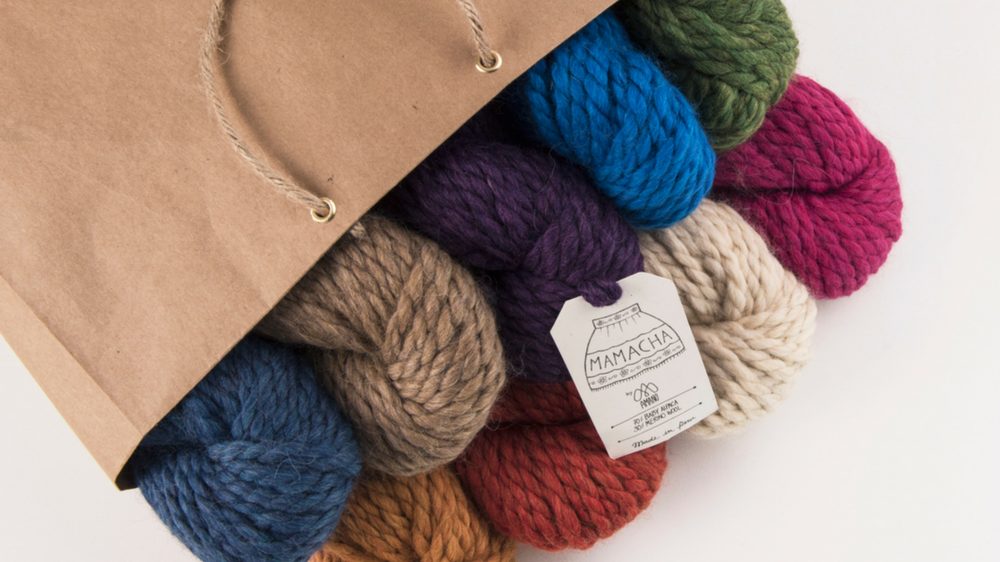
Our recommendation: MAMACHA, 70% Baby Alpaca and 30% Merino Wool. The perfect combination of softness and structure. The merino gives it the elastic memory that keeps each cross firm, while the alpaca adds the drape that keeps the garment from looking stiff. Cables in MAMACHA have spectacular definition.
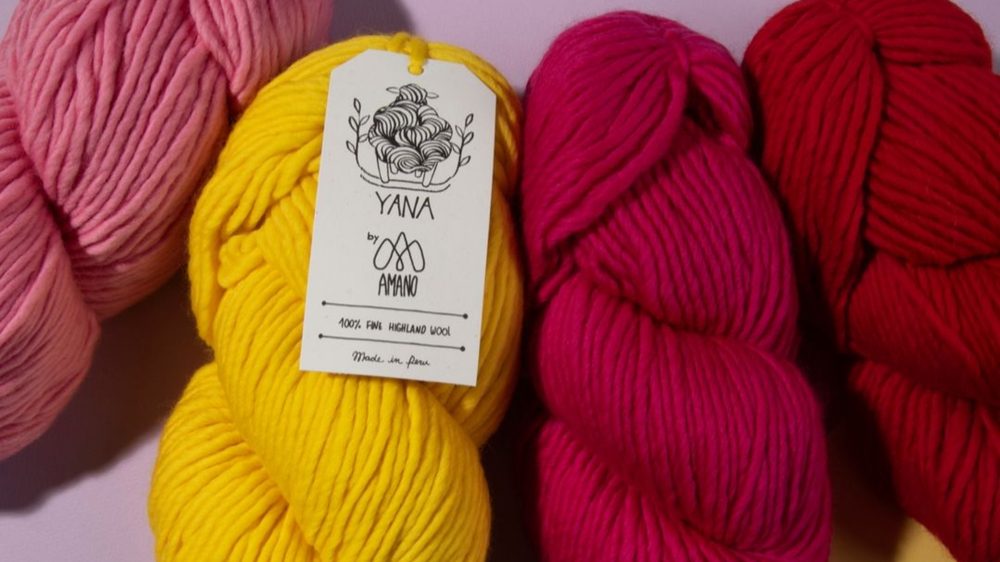
Also YANA, 100% Fine Peruvian Sheep Wool. Its natural body makes the crossed stitches look crisp and with real depth. And if you want maximum volume, YANA XL turns a cable into something almost sculptural.
Ready to start? We have a pattern made for you:
Cristina Sweater, knitted in YANA
The ocho stitch: the variation that elevates everything
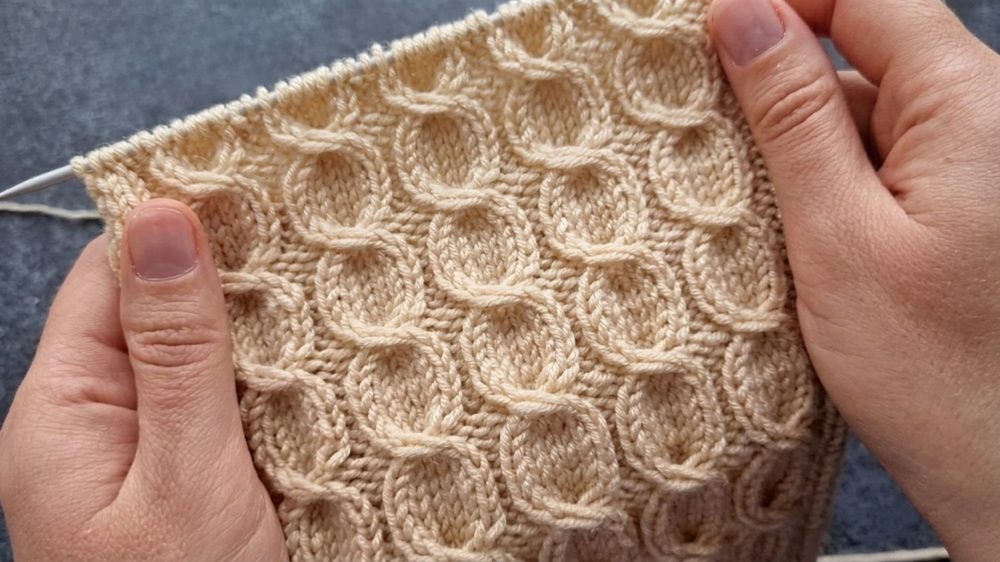
If you already have a basic cable down, the ocho is the next step. It is one of those stitches that triggers that inevitable reaction when someone sees the finished garment and asks how did you do that?
What is an ocho stitch?
The ocho is a symmetrical cable, stitches cross in both directions, creating that characteristic figure-eight or infinity shape.
The result is a fabric with far more volume and visual complexity than a simple cable, even though the base technique is exactly the same.
The difference lies in the frequency and direction of the crosses. Once you understand that, the ocho stops being intimidating.
How do you knit an ocho?
It is a cable where you alternate the direction. Specifically:
- Divide your panel into two halves. If you are working over 8 stitches, that is 4 and 4.
- On the first crossing row, cross to the left (held stitches in front).
- Work the middle rows without crossing. The number of rows between crosses determines how elongated or compact the figure eight looks.
- On the next crossing row, cross to the right (held stitches behind).
- Repeat, alternating. That back-and-forth motion is what draws the eight.
The most common mistake: always crossing in the same direction. That does not create an ocho, it creates a spiral cable. If your ocho does not look symmetrical, this is almost always the reason.
The most important tip for ochos
Mark your stitches. Always. A stitch marker at each end of the ocho makes it impossible to get lost inside the pattern, especially when working several ochos simultaneously across the same garment.
And something that saves a lot of frustration: write down which row of the cycle you are on. A piece of paper nearby, an app, whatever works. In an ocho pattern, losing count means frogging several centimeters.
What yarn to use for ochos?
Everything that applies to cables applies doubly here, because the ocho has twice as many crosses and needs twice as much definition.
MAMACHA is our top recommendation for the structure the merino provides. QUMA, 100% fine merino, also works beautifully if you want an ocho with a softer, lighter feel.
A tip on weight: for your first ocho, choose a medium or bulky fiber. Large stitches make the cross clearly visible and mistakes easy to catch instantly. With a fine yarn, a miscrossed ocho shows up twenty rows later.
Fair Isle: color, pattern, and Scottish magic
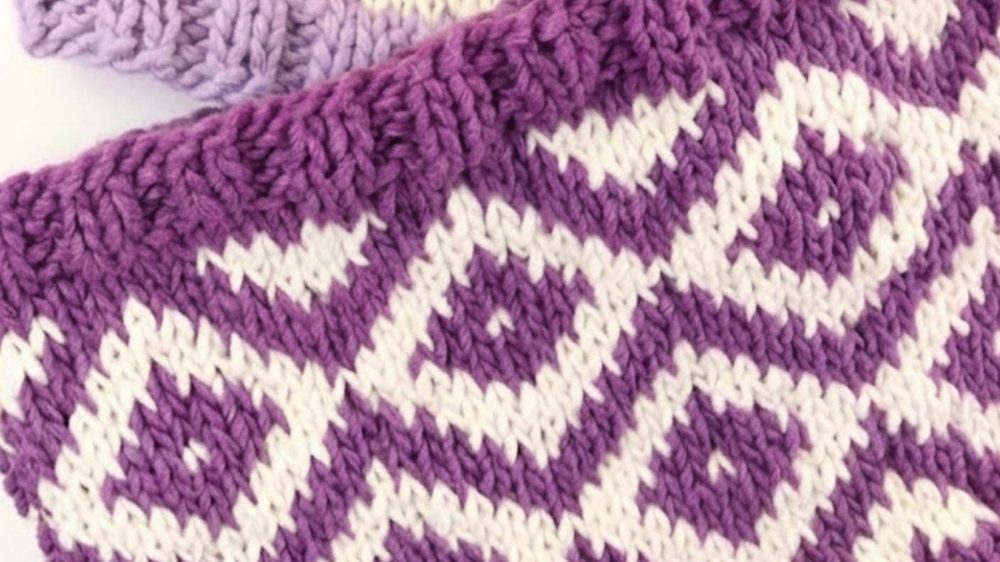
Fair Isle is a world of its own within knitting and one of the most fascinating ones.
What is Fair Isle?
It is a colorwork knitting technique that originated in Scotland. You work with two or more colors per round, alternating them to create repeated geometric motifs. The result is those iconic sweaters with bands of patterns seen in mountain photographs, winter films, and on the runway.
How do you knit Fair Isle?
The idea is simple, even if it feels strange at first:
- You work with two yarns at once. You knit with one while the other waits at the back of the work.
- The waiting yarn runs across the back. It is called a float, and it is the heart of the technique.
- When it is time to change colors, you drop one and knit with the other. The one you dropped becomes the float.
- If a color is not used for more than 5 consecutive stitches, catch the float by crossing it once with the working yarn. This prevents long strands at the back that could snag when dressing.
Is Fair Isle difficult?
Honestly, it has a learning curve. But it is not as complicated as it looks.
The secret is in the floats: don’t pull them tight. That is 90% of the problem. A tight float puckers the fabric and the garment comes out narrower than it should, and no amount of blocking will fix it afterward. Leave the yarn a little loose at the back, even looser than feels right.
A trick that works: every time you change colors, gently spread the stitches you just worked on the right needle before continuing. This forces the float to sit with ease.
Once your hands get used to it, the process becomes almost hypnotic and the result never stops surprising you.
What yarn to use for Fair Isle?
Fair Isle needs a fiber that takes color well, has a little grip between strands, what knitters call “stickiness”, and holds stitch definition.
That grip is what makes color changes blend into each other rather than looking patchy.
Sheep wool is the traditional fiber and remains the best option for good reason. YANA, with its wide palette of bold, vibrant colors, is ideal for creating the contrasts that make a Fair Isle pattern truly stand out.
And a design tip: in Fair Isle, contrast matters more than the color itself. Two beautiful tones of similar brightness will make the pattern disappear. If in doubt, photograph your two skeins in black and white: if they read differently there, they will work together.
Which one to start with based on your skill level
| Basic cable | Ocho | Fair Isle | |
| Difficulty | Accessible | Intermediate | Intermediate–advanced |
| You need | Cable needle | Cable needle + markers | Two balls + tension control |
| The challenge is | The first cross | Keeping count | The floats |
| Ideal fiber | MAMACHA · YANA | MAMACHA · QUMA | YANA (for its palette) |
| Good first project | Cowl or hat | Hat or scarf | Cowl or mittens |
If you have never tried any of them: start with a simple cable on a cowl. It comes together in a few hours, and that first cable rising from the fabric is one of the best feelings knitting has to offer.
Questions we always get asked
Can cables be done in crochet?
Yes, and they look incredible. The technique is different, worked with post stitches around the front or back, but the visual effect is very similar. If you are a crochet knitter, you are absolutely not left out of this world. Quite the opposite.
Do I need a cable needle for cables?
Technically, no. Some experienced knitters work the crosses directly without a cable needle once they have enough practice. But in the beginning, the cable needle makes the process far more controlled and eliminates the risk of dropping stitches along the way.
Why don’t my cables look defined?
Almost always, it is the fiber. A very soft yarn with no structure will not show the relief of the cable clearly: the stitch flattens.
That said, pure alpaca is not wrong for cables. It just produces a different result: a softer relief, with a halo, with a romantic, diffused quality. Some knitters are looking for exactly that. If what you want is a sharp, crisp, almost sculptural cross, then you need structure: MAMACHA or YANA.
Do cables use more yarn?
Yes, considerably, between 20% and 30% more than the same fabric in stockinette, because the cross consumes yarn. If you are calculating how much yarn to buy for a cable project, do not use the standard yardage estimate: knit your gauge swatch with the cable pattern included.
Ready to knit your first ocho, your first cable, or your first Fair Isle?
Every project begins with a decision: what you are going to knit it with.
At Amano Yarns we develop each quality to inspire new creations, with carefully selected natural fibers and a color palette born from the landscapes of Peru. And when it comes to textured and relief stitches, the right fiber is not a detail, it is what makes a cable look like sculpture and a Fair Isle look like a work of art.
The quality of the fiber will show in every cross, in every stitch, in every row.
Find your next fiber: